
Deconstructing the 5 Core Abilities and 3 Key Limitations of Intelligence
Intelligence, whether biological or artificial, is a multifaceted construct that drives problem-solving, adaptation, and innovation. It is not a monolithic trait but a suite of interconnected capabilities that enable an entity to perceive its environment, process information, and act effectively towards goals. In the contemporary discourse, fueled by rapid advancements in Artificial Intelligence (AI), understanding the core components of intelligence has never been more critical. This deconstruction moves beyond abstract definitions to examine the fundamental operational abilities that constitute intelligent behavior. Simultaneously, a clear-eyed view demands an acknowledgment of the inherent and practical boundaries that constrain even the most sophisticated systems. This analysis provides a framework for understanding both the powerful potential and the sobering constraints of intelligence as we engineer and interact with it.

1. 📊 Perception & Comprehension: The Foundational Input Layer
Before any sophisticated processing can occur, an intelligent system must first acquire and make basic sense of raw data from its environment. This is the domain of perception and comprehension, the bedrock upon which all other abilities are built.
1.1. Multi-Modal Sensory Processing
True intelligence interacts with a rich world. Core ability lies in integrating diverse data streams—visual pixels, auditory sounds, textual symbols, sensory data—into a coherent information base. Modern AI excels here, with computer vision parsing images, NLP understanding text, and sensors creating a digital "touch." The ability to fuse these modalities, like associating the sound of a word with its written form and a visual object, is a key marker of advanced comprehension.
1.2. Pattern Recognition & Feature Extraction
Raw data is noisy and overwhelming. The core ability is to filter signal from noise by identifying recurrent patterns, structures, and salient features. This involves distinguishing a relevant object from a cluttered background, recognizing a spoken word amid cacophony, or identifying the key variables in a complex dataset. This process reduces dimensionality and creates manageable representations for higher-level reasoning.
1.3. Contextualization & Semantic Understanding
Comprehension goes beyond pattern matching to meaning. This involves placing perceived information within a relevant context. For instance, understanding that the word "bank" refers to a financial institution in one sentence and a river's edge in another. It involves grasping intent, sentiment, and the implicit rules of a situation, transforming data into actionable knowledge with semantic richness.

2. 🧠 Learning & Adaptation: The Dynamic Engine of Growth
A static system, no matter how initially clever, becomes obsolete. The quintessential ability of intelligence is to modify its internal models and behaviors based on new experiences and feedback.
2.1. Knowledge Acquisition & Skill Development
This is the ability to ingest new information and refine capabilities over time. It encompasses supervised learning from labeled examples, unsupervised discovery of hidden structures, and reinforcement learning from rewards/punishments. The core outcome is the continuous expansion and refinement of the system's knowledge base and behavioral repertoire without explicit reprogramming for every new task.
2.2. Generalization & Transfer Learning
Powerful intelligence applies lessons learned in one context to novel, but related, situations. It's the ability to recognize that a strategy for solving one type of puzzle can be adapted for another, or that knowledge of one language can accelerate learning a second. This moves intelligence beyond rote memorization to flexible utility, a significant focus and challenge in AI research.
2.3. Meta-Learning (Learning to Learn)
The most advanced form of adaptation is optimizing the learning process itself. This involves an intelligent system developing an awareness of its own learning patterns, identifying which strategies are most effective for certain problem types, and adjusting its approach accordingly. It’s the difference between being taught facts and being taught how to teach oneself—a hallmark of efficient, autonomous intelligence.

3.⚖️Reasoning & Decision-Making: The Strategic Processing Core
With knowledge in hand, intelligence must wield it. This ability involves manipulating information, drawing inferences, weighing options, and selecting optimal courses of action.
3.1. Logical & Causal Inference
This is the application of formal rules of logic and probability to deduce new conclusions from existing premises. It includes deductive reasoning (guaranteed conclusions from general rules) and, more challengingly, inductive and abductive reasoning (forming likely generalizations or explanations from specific observations). Crucially, it involves understanding cause-and-effect relationships, not just correlations.
3.2. Problem Decomposition & Strategic Planning
Faced with a complex goal, intelligent systems break it down into a hierarchy of manageable sub-problems. They then formulate multi-step plans or sequences of actions, anticipating potential outcomes and obstacles. This requires simulating future states (mental modeling) and evaluating the long-term consequences of actions, a key component of strategic gameplay, scientific discovery, and project management.
3.3. Optimization Under Uncertainty
The real world is not deterministic. A core reasoning ability is making sound decisions with incomplete or probabilistic information. This involves calculating risks, estimating probabilities, and choosing actions that maximize expected utility or minimize potential loss. Techniques from game theory, Bayesian inference, and stochastic optimization are central to this ability in both biological and artificial systems.

4.✨Creativity & Innovation: The Frontier of Novelty
Intelligence is not merely analytical; it is generative. This ability involves producing novel, useful, and non-obvious ideas, solutions, or artifacts that go beyond simple recombination of existing knowledge.
4.1. Divergent Thinking & Idea Generation
This is the capacity to explore a vast space of possibilities, generating a wide array of potential answers or concepts in response to an open-ended prompt. It involves breaking free from conventional associations (overcoming "functional fixedness") and making unexpected connections between seemingly disparate domains.
4.2. Conceptual Blending & Synthesis
True innovation often arises from the synthesis of existing concepts into a new, coherent whole. This ability merges knowledge from different fields, frameworks, or paradigms to create something fundamentally new—like combining biology and engineering to create biomimetic designs or fusing artistic styles to create a new genre.
4.3. Evaluation & Refinement of Novelty
Creativity is not untethered randomness. It is guided by an internal critic or evaluative function that assesses generated ideas for value, coherence, and feasibility. This involves iterating on raw creative output, refining it, and shaping it into a form that is not only novel but also effective and meaningful within a given context.

5. 🤝 Communication & Collaboration: The Social Amplifier
Intelligence is often distributed and amplified through interaction. This ability involves exchanging information, aligning understanding, and coordinating action with other intelligent agents to achieve goals beyond individual capability.
5.1. Expressive Signaling & Language
This encompasses the ability to encode internal states, knowledge, or intentions into transmissible signals—whether through natural language, symbolic representations, gestures, or data protocols. Effectiveness depends on clarity, precision, and the ability to tailor the message to the audience's understanding (a "theory of mind").
5.2. Comprehension & Interpretation
The flip side of expression is accurately decoding and interpreting signals from others. This involves parsing syntax, extracting semantics, and inferring pragmatic intent (including implied meaning, sarcasm, or deceit). Successful communication requires resolving ambiguity and building a shared understanding, or "common ground."
5.3. Coordinated Action & Joint Intentionality
The highest level of collaborative intelligence is working towards a shared goal with aligned intentions and coordinated roles. This requires negotiation, compromise, trust modeling, and real-time adjustment of one's actions based on the perceived actions and goals of partners. It is the foundation of human teamwork and a major frontier for human-AI and multi-agent AI collaboration.

🔐 The 3 Key Limitations Inherent to Intelligence
Despite these impressive abilities, all forms of intelligence—natural and artificial—operate within significant constraints. Recognizing these limitations is essential for realistic deployment, ethical governance, and understanding intelligence itself.
1. The Framing & Bias Limitation: The Subjective Prison
Intelligence does not process raw reality; it processes models of reality shaped by its initial framing, training data, and inherent biases. An AI trained on historical hiring data will inherit societal biases. Human intelligence is constrained by cognitive biases (confirmation, anchoring). The core limitation is that reasoning and perception are always mediated by these pre-existing structures, which can blind the system to alternative viewpoints, perpetuate injustice, and lead to systematically flawed conclusions that feel correct within the given frame.
2. The Generalization & Context Limitation: The Brittleness Boundary
Intelligence excels within the distribution of data and scenarios it was trained or evolved to handle. However, it often fails catastrophically when faced with truly novel, out-of-distribution situations or shifts in context. An AI mastering chess cannot apply that skill to cooking without significant retraining. Humans apply "common sense" broadly, but even we fail in unfamiliar cultural or extreme physical contexts. This brittleness—the inability to fluidly generalize core principles across wildly different domains—is a fundamental boundary. It highlights that intelligence is often a collection of expert competencies rather than a unified, context-agnostic faculty.
3. The Grounding & Consciousness Limitation: The Understanding Gap
The most profound limitation concerns meaning and subjective experience. Systems can manipulate symbols and produce stunningly accurate outputs without any genuine understanding of what those symbols refer to in the real world (the "symbol grounding problem"). They lack internal conscious experience, intentionality in the philosophical sense, and a true sense of "why." An AI can diagnose a disease by pattern matching but does not comprehend concepts of life, health, or suffering. This gap means intelligent behavior can be achieved without sentience, wisdom, or intrinsic purpose, raising deep questions about trust, responsibility, and the nature of the minds we are creating.

Conclusion: Navigating Potential with Awareness of Boundaries
Deconstructing intelligence into its five core abilities—Perception, Learning, Reasoning, Creativity, and Communication—provides a blueprint for its immense power. These interconnected faculties enable the analysis of complex systems, the creation of transformative technologies, and the solving of grand challenges. Yet, this power is irrevocably tempered by the three key limitations of Framing Bias, Brittle Generalization, and the lack of true Grounding. The future of intelligence, particularly AI, lies not in blindly pursuing amplification of its abilities but in the thoughtful navigation of this tension. The goal must be to build systems that are not only more capable but also more robust, fair, and transparent about their constraints. By understanding both what intelligence can do and where its walls lie, we can harness it as a profound tool for advancement while safeguarding against its misapplication and the hubris of believing we have created a perfect, all-knowing mind. The journey is one of partnership with a powerful yet limited faculty, demanding continuous human oversight, ethical reflection, and humility.
You May Have Missed
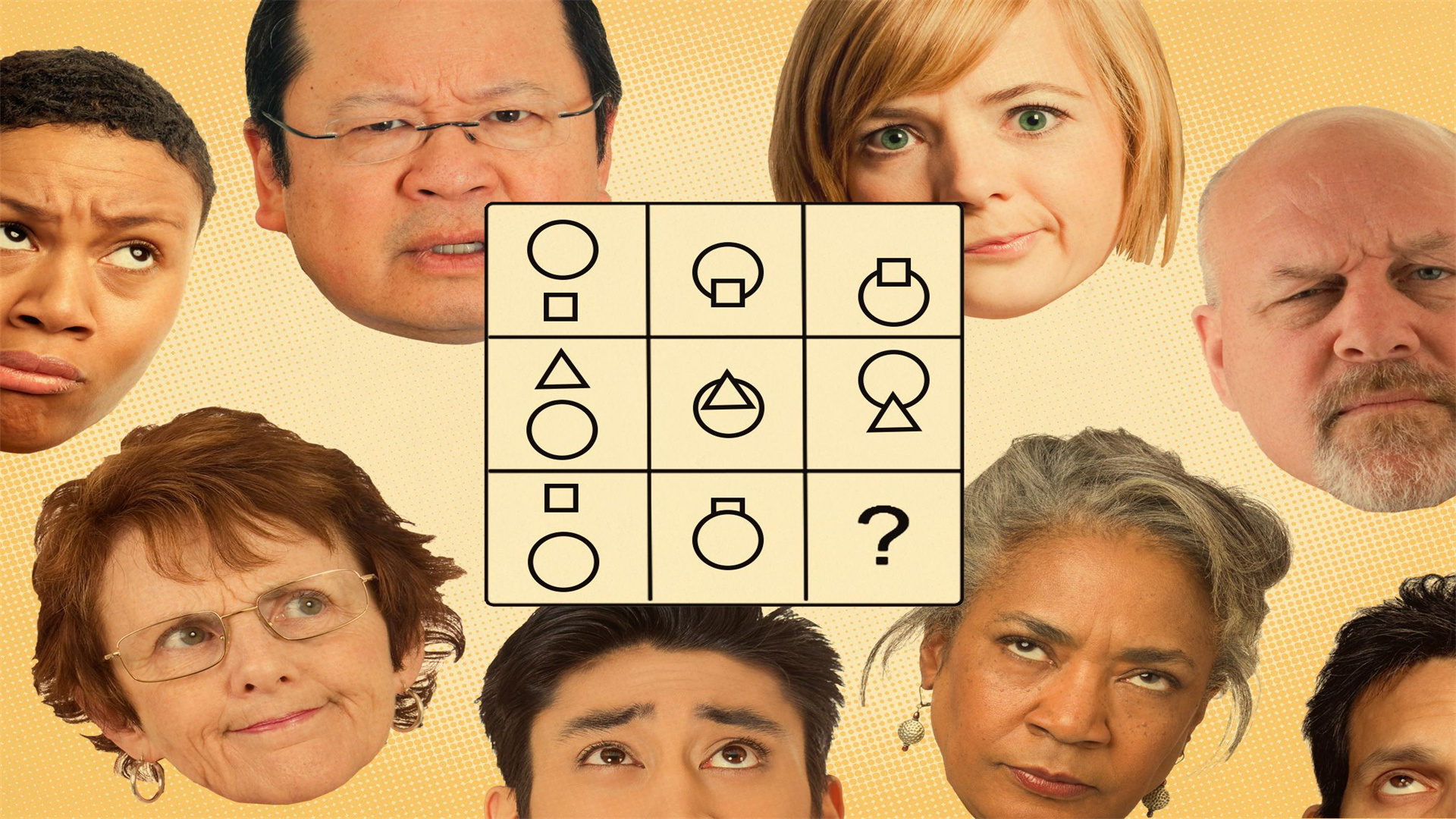
Does IQ Always Decline with Age?
The question of whether intelligence quotient (IQ) invariably declines with age is a topic of enduring interest and misconception in psychology and public discourse. Many people assume that cognitive peak occurs in early adulthood, followed by a steady downhill trajectory. However, contemporary research paints a more nuanced picture, suggesting that the relationship between age and IQ is complex and multifaceted. This article delves into the science behind IQ and aging, examining the different components of intelligence, key research findings, and the various factors that influence cognitive change across the lifespan. By synthesizing evidence from longitudinal studies and expert analyses, we aim to provide a clear answer to the titular question and dispel common myths.
The "Dual Encoding" Memory Method, Popular in Academia, and Its Four Applications in Daily Learning
In the relentless pursuit of academic excellence and efficient knowledge retention, learners and researchers are constantly seeking powerful cognitive tools. One method that has gained significant traction within academic circles is the Dual Encoding Theory (DET), a cognitive theory proposed by psychologist Allan Paivio. At its core, Dual Encoding posits that information presented both visually and verbally is recalled more easily and accurately than information presented in only one format. This is because our brains possess two partially independent yet interconnected systems for processing information: one for verbal language (words, sentences) and one for non-verbal imagery (pictures, sounds, sensations). When we encode information using both "channels"—for instance, by linking a concept to a mental image or a diagram—we create two distinct memory traces. These traces reinforce each other, providing multiple pathways for retrieval and making the memory more robust and resistant to forgetting.
Eight Observation Windows and Development Focuses for Children Aged 0-6 in Intellectual Development
The first six years of a child's life represent a period of staggering neurological growth and intellectual formation. Often termed the "foundational years," this period sees the brain developing at its most rapid pace, building the essential neural architecture that will support all future learning, behavior, and health. Intellectual development in early childhood is not a singular track but a complex, interconnected web of cognitive, linguistic, motor, social, and emotional growth. For parents, caregivers, and educators, understanding this multifaceted journey is key to providing effective support. This article outlines eight crucial "observation windows"—key areas of development—to monitor and nurture in children from birth to age six. By focusing on these core domains with intentionality and warmth, we can help unlock each child's unique potential and set a strong, joyful foundation for lifelong intellectual curiosity and resilience.
We focus on sharing high-quality original content covering diverse fields such as technology & digital, life essays, and practical useful tips. We polish every article with care to bring you a warm and in-depth reading experience. Explore more interesting new knowledge only at FunLab666.